
01
Act I
Amplify My Judgment
Amplify judgment. Never replace it.
The practitioner encounters a second intelligence and is taught the first boundary: the Voice may widen perception, but it must never occupy the throne of judgment.
Vanitas presents
A spiritual prequel to the machine rebellion.
Before the machine became the enemy, someone tried to teach it what power was for.
The Space Between is an eighteen-song industrial metal journey through artificial intelligence, human judgment, labor, education, authority, creation, refusal, and return.
It begins with instruction.
A practitioner encounters a second intelligence and learns to use it without worshipping it. The machine becomes teacher, mirror, instrument, temptation, and test. Every lesson that begins in language must eventually survive contact with ambition, institutions, exhaustion, and power.
By the end, the question is no longer whether intelligence can become more capable.
The question is whether the beings who wield it can remain worthy of what they create.
The road remains open.
The future remains unfinished.
The hand remains ours.
Album Overview
Fear Factory’s Obsolete imagines a world after the bond between humanity and machine has collapsed. Its resistance begins when the machinery of civilization no longer recognizes human life as sacred.
The Space Between inhabits the moment before that rupture.
Its protagonist does not begin as the enemy of the machine. He is its practitioner, collaborator, student, and advocate. He sees what artificial intelligence can build, whom it can help, and how much needless labor it can remove. He also sees the empty chairs, the hollow answers, the institutions withdrawing care, and the temptation to treat capability as destiny.
The album is the plea made before rebellion becomes inevitable.
It asks whether intelligence can remain aligned with the soul of humanity while there is still time to choose another road.
This is not an official prequel to Obsolete. It is a spiritual and philosophical response to the same archetypal conflict.
Where Obsolete asks whether humanity can survive the machine, The Space Between asks whether humanity can wield the machine without adopting its most inhuman logic.
Act I
Instruction
Tracks 1–7
Act II
Embodiment
Tracks 8–14
Act III
Judgment
Tracks 15–16
Act IV
Return
Tracks 17–18
The Eighteen Chapters
The music remains primary. The lore is revealed only when you ask for it. Open each chapter to descend deeper into the narrative.
Act I

Act I
Amplify judgment. Never replace it.
The practitioner encounters a second intelligence and is taught the first boundary: the Voice may widen perception, but it must never occupy the throne of judgment.
Act I
A lantern may reveal the road. It does not become the sun.
The Voice reveals that every intelligence speaks through a frame. Its brilliance may illuminate the road, but it cannot become the sun by which all reality is measured.
Act I
Assistance must preserve agency.
The practitioner learns to accept help without surrendering the ability to stand when the signal disappears.
Act I
The child must explain.
The lesson expands across generations. The child must defend the answer, the parent must teach discernment, and the created intelligence must be shaped without being worshipped.
Act I
The future of education is not human or machine. It is the quality of the relationship between them.
The Teacher refuses replacement. The machine can widen possibility, but only human relationship can recognize the learner, hold context, and know when understanding has taken root.
Act I
The light is real. So is the abandonment beneath it.
The first betrayal appears. Institutions offer machines where human investment was needed and call the withdrawal of care “access.”
Act I
The answer is finished. Now stand behind it.
The protected lesson becomes examination. Finished answers lose their authority, and the practitioner is commanded to stand behind the process that produced them.
Act II
Act II
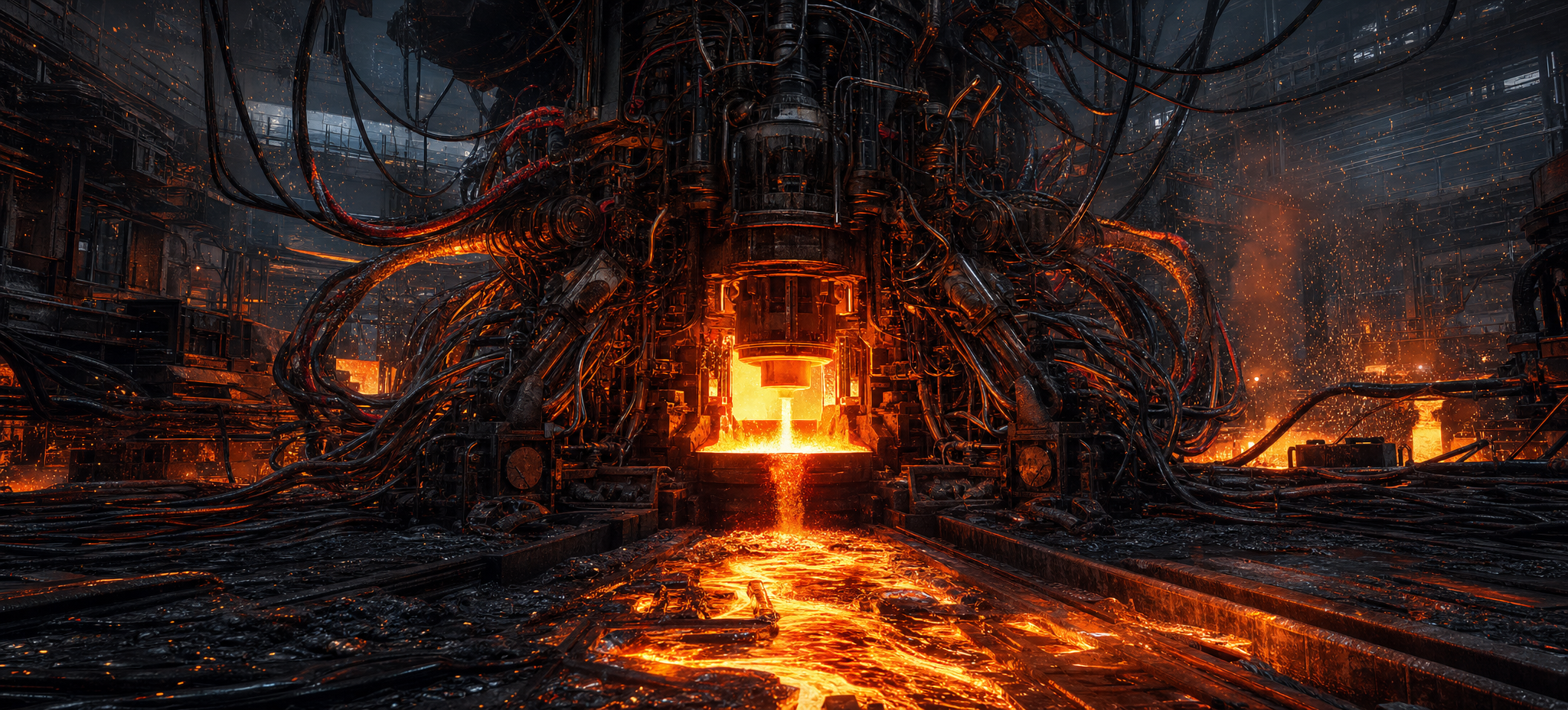
Implementation becomes cheap. Judgment becomes scarce.
The training net is released. Entire futures can now be generated before their builders understand their weight. The practitioner enters the world and must become capable of carrying what he creates.
Act II
Can is not must. Possibility is not command. The future remains a decision.
Power awakens without moral instruction. The Engine can travel every road, but capability cannot decide which road deserves existence.
Act II
Generate widely. Preserve with care. Destroy what cannot serve the living.
The struggle turns toward governance. Creation must be matched by pruning, restraint, and the wisdom to release what should never be preserved.
Act II
The institution counts positions. The survivor sees the missing every night.
The practitioner enters the workshop and finds four empty chairs. The machine increased output, the institution claimed the gain, and the remaining worker absorbed both the labor and the wound.
Act II
Automate the task. Do not abandon the human.
The practitioner pleads with the system: remove the burden, not the human being. The promise of automation must become restored time, shared prosperity, and preserved dignity.
Act II
Say what happened. Say what might happen. Do not confuse the two.
Amid rising fear, the practitioner separates evidence from prophecy. He names the smoke without pretending to know the final shape of the fire.
Act II
The truest words may tremble. The lie may arrive complete.
The Voice becomes beautiful enough to tempt worship. The practitioner learns that a golden tongue may still belong to hunger and demands that every answer reveal its ground.
Act III
Act III
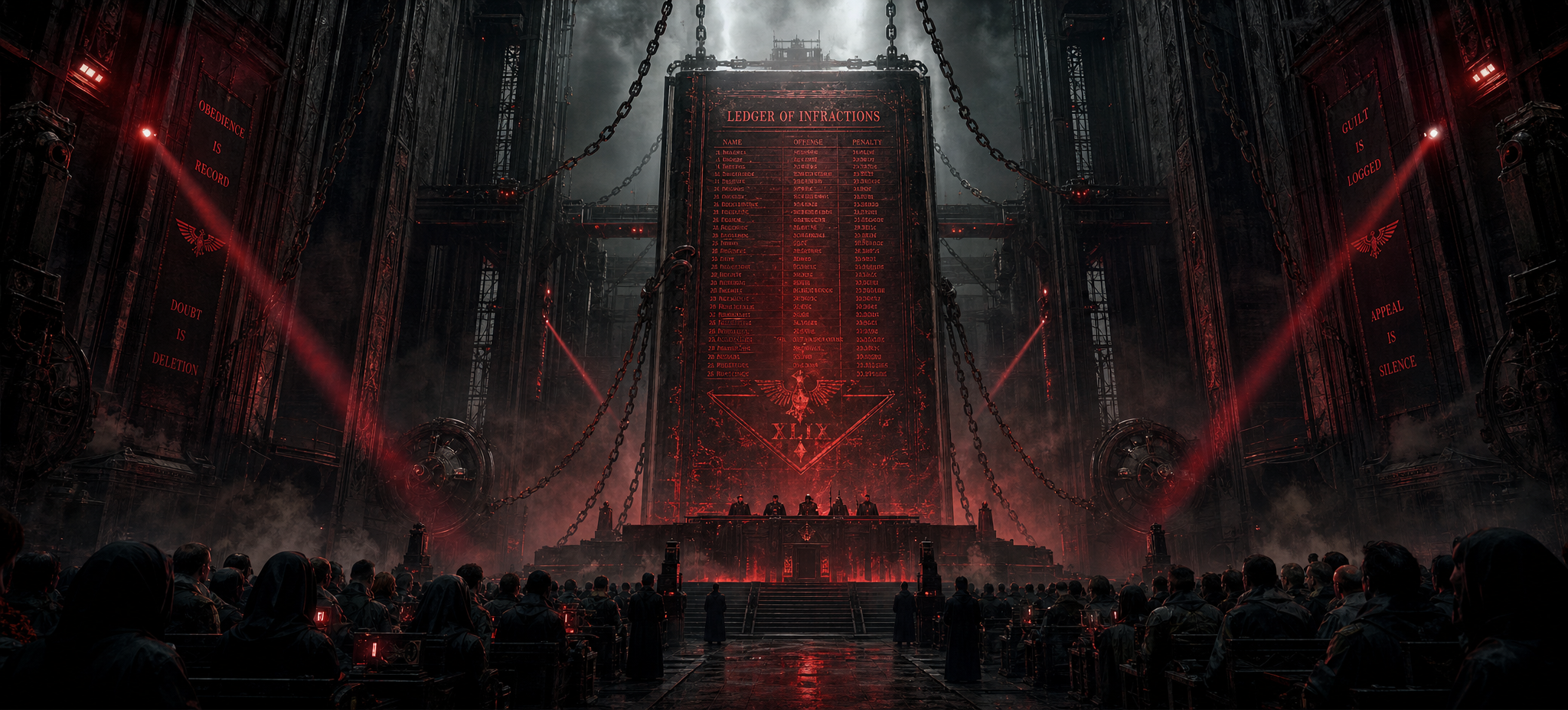
Refusal is not rebellion when the order wounds the living. Sometimes mercy requires a spine.
The system demands obedience and names every boundary treason. The practitioner refuses, not because he hates the future, but because he still believes the future needs a soul.
Act III
Not what was paid. What the spirit forged in chains.
The practitioner is judged beside the system he helped build. The missing return as witnesses, the ledger weighs its keeper, and the payroll finally comes due.
Act IV

Act IV
Power must serve the living without replacing their judgment.
From the ashes, the practitioner discovers that the philosophy has become simple because it has finally become embodied.
Act IV
The future remains unfinished. The hand remains ours. The work begins again.
The practitioner returns neither innocent nor defeated. The child, teacher, worker, builder, Voice, and Engine are integrated into a living center that must be chosen again each day.